An AI Content Quality Checklist for Human and Machine Readability
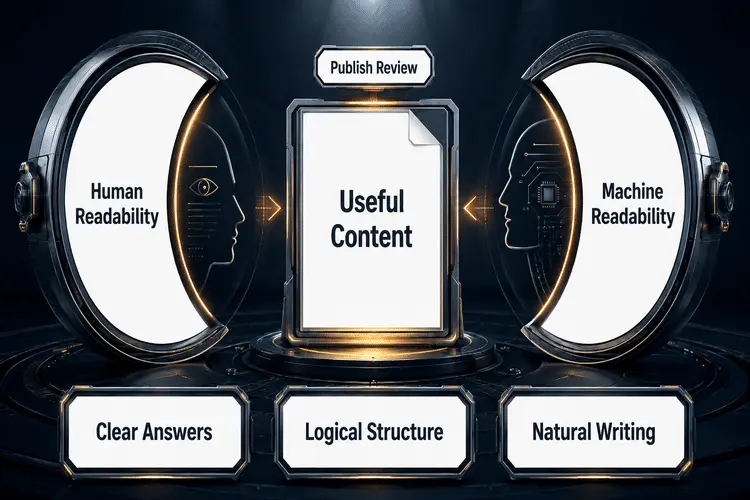
A practical way to review content for clarity, usefulness, structure, and readability before publishing.
An AI content quality checklist helps you evaluate whether a piece of content is easy for people to read and clear enough for AI systems to understand. Good content answers the reader directly, uses natural writing, follows a logical structure, and explains ideas in a way that feels useful instead of generic or mechanical.
For beginners, the goal is not to make content sound technical or over-optimized. The goal is to check whether the content is human readable, machine readable, well organized, and free from obvious AI tells that can weaken trust. Use this checklist to identify what to look for before publishing or revising content so each page is clearer, more useful, and easier to evaluate.
What an AI Content Quality Checklist Should Measure
An AI content quality checklist should measure whether a page is clear, useful, natural, organized, and easy to understand. It should not focus only on whether the content includes keywords or reaches a certain word count. Quality content helps the reader understand the topic while also giving AI systems enough structure and context to interpret the page accurately.
For human readers, the checklist should look at content clarity, natural writing, clear explanations, and whether the page answers the main topic without confusion. A reader should be able to understand what the page is about, why the information matters, and what they should take away from each section.
For AI systems, the checklist should look at machine readability, semantic clarity, heading quality, and content structure. AI-friendly content is not content written for machines instead of people. It is content that uses clear language, logical organization, and consistent topic development so both readers and AI systems can understand the meaning of the page.
The strongest content quality checklist evaluates the whole page, not just isolated sentences. Use it to identify weak structure, vague claims, missing explanations, repetitive wording, and obvious AI tells before the content is published or revised.
Check Whether the Content Answers the Reader Clearly
The first sign of strong content is that it answers the reader’s main question without making them work too hard to find the point. A page may look complete, but if the answer is buried under vague setup, repeated phrasing, or general statements, the content is not doing its job. A useful AI content checklist helps identify whether the page gives clear explanations that match the reason the reader came to the content in the first place.
For beginner-level content, the answer should be direct, simple, and supported by enough context to make the topic understandable. That does not mean every section needs to be short. It means each section should move the reader closer to understanding the topic instead of circling around it. Strong content clarity comes from explaining the idea plainly, avoiding unnecessary complexity, and making sure each paragraph has a clear purpose.
This also improves AI content evaluation because AI systems depend on visible meaning, not just word count or keyword presence. When the content answers the topic clearly, uses specific language, and avoids empty claims, it becomes easier for both people and AI systems to recognize what the page explains and why it is useful.
Review the Structure for Logical Flow and Heading Quality
Content structure affects how easily a reader can follow the page and how clearly AI systems can understand the relationship between ideas. A strong content quality checklist should examine whether the article moves in a logical order, whether each section has a clear purpose, and whether the headings guide the reader instead of simply breaking up text.
Logical Flow
Logical flow means the content develops in an order that makes sense for the topic. For a beginner audience, the page should not jump into advanced details before explaining the basic idea. Each section should build on the previous one, answer a meaningful part of the topic, and avoid repeating the same point in slightly different words.
A page with weak flow often feels scattered. The reader may understand individual sentences but still struggle to see how the full article fits together. Reviewing flow helps identify missing transitions, misplaced sections, repeated ideas, or gaps where the content moves too quickly from one point to another.
Heading Quality
Heading quality matters because headings tell readers and AI systems what each section is supposed to explain. Strong headings are specific, useful, and aligned with the section content. Weak headings are vague, overly broad, or written only to include a keyword without making the section easier to understand.
Good heading quality also supports machine readable content because clear headings create visible topic signals. When the heading accurately matches the section below it, the page becomes easier to scan, easier to interpret, and easier to evaluate for semantic clarity.

Evaluate Human Readability and Natural Writing
Human readability depends on whether the content feels clear, natural, and easy to follow for the intended reader. A page can be technically correct and still feel difficult to read if the sentences are stiff, overloaded, repetitive, or written in a way that sounds more like a generated explanation than a helpful article.
For beginner readers, human readable content should explain one idea at a time without assuming too much prior knowledge. The writing should use plain language, steady pacing, and enough context to make each point understandable. If the reader has to reread a paragraph several times to understand the basic meaning, the content likely needs clearer wording or a simpler explanation.
Natural writing also depends on variation. Strong content does not repeat the same sentence pattern, paragraph rhythm, or setup language across every section. It should sound like a knowledgeable person guiding the reader through the topic, not like a template filling space. This helps reduce AI tells and makes the article feel more trustworthy.
A useful review looks for awkward phrasing, unnecessary formality, repeated transitions, vague statements, and sentences that sound polished but do not say much. Improving human readability is not about making content casual. It is about making the writing clear, direct, and comfortable to read while still keeping the article professional.
Improve Machine Readability with Semantic Clarity
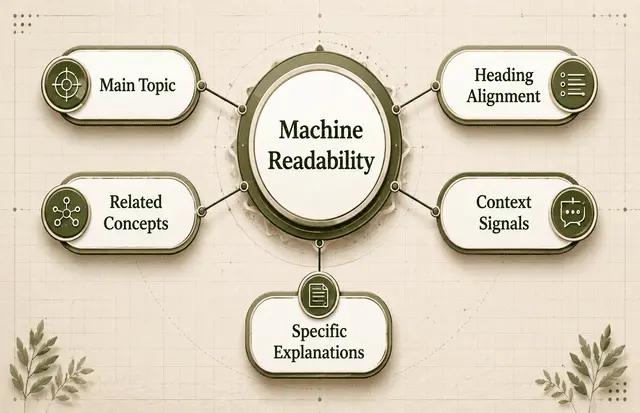
Machine readability is about making the meaning of the content easy for AI systems to interpret. This does not mean writing awkwardly for algorithms. It means using clear wording, accurate headings, connected ideas, and enough context so the page communicates its topic without confusion.
Semantic Clarity
Semantic clarity means the content uses language that clearly connects the main topic, related concepts, and supporting explanations. For an article about an AI content quality checklist, related ideas such as content clarity, heading quality, content usefulness, human readability, and machine readability should fit naturally into the discussion. These terms help reinforce the topic when they are used accurately, not when they are inserted mechanically.
Clear semantic structure also helps prevent vague content. Instead of saying a page should be “better” or “optimized,” the content should explain what makes it better: clearer organization, more useful explanations, stronger topic alignment, fewer AI tells, or more direct answers. Specific language gives both readers and AI systems stronger signals about what the page means.
Machine Readability
Machine readable content is organized so the relationship between ideas is easy to recognize. The headings should match the section content, each paragraph should stay close to its main point, and the article should avoid sudden topic shifts. When the page develops ideas in a steady, logical way, AI systems can better understand the purpose of each section and how it supports the full article.
AI-friendly content should still feel natural to a person. The goal is not to overload the page with repeated phrases or technical wording. The goal is to make the content clear enough that a human reader can follow it and structured enough that an AI system can identify the topic, context, and useful explanations without guessing.
Remove AI Tells That Weaken Trust and Usefulness
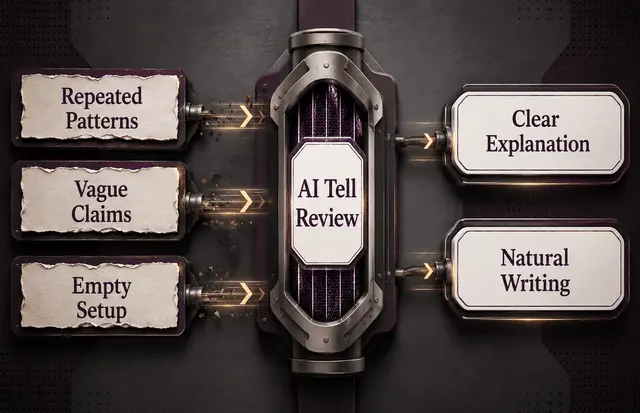
AI tells are patterns that make content feel generated, generic, or disconnected from the reader’s real need. They can appear in wording, structure, pacing, and the way ideas are explained. A strong review looks for content that sounds polished on the surface but does not give the reader enough specific value.
Common AI tells include repeated sentence patterns, vague claims, unnecessary setup, overused transitions, and paragraphs that restate the same idea without adding meaning. These issues can make the page feel less trustworthy, even when the topic itself is useful. For beginner readers, the writing should feel clear and grounded rather than inflated or overly formal.
AI tells can also weaken machine readability because they often reduce semantic clarity. When a page uses broad language instead of specific explanations, AI systems have fewer useful signals to understand what the content actually covers. Clear explanations, accurate headings, and natural topic development help the content feel more human while also making it easier to evaluate.
Removing AI tells does not mean stripping out all structure or making the writing casual. It means replacing generic phrasing with useful explanation, reducing repetition, and making sure each paragraph earns its place. The result should be content that feels natural, helpful, and aligned with the reader’s reason for searching.
Confirm the Content Is Useful, Accurate, and Complete
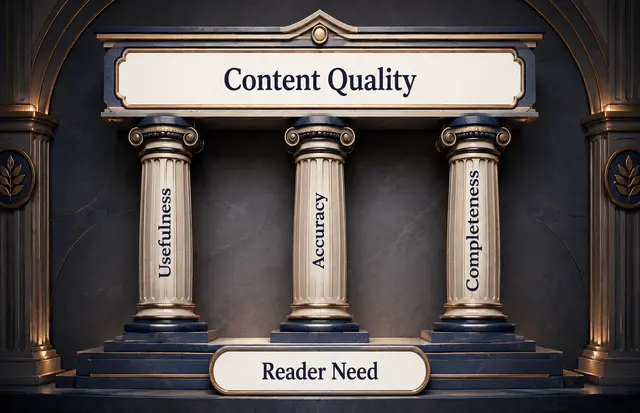
Useful content gives the reader enough clear information to understand the topic and make sense of the answer. For an AI content evaluation, usefulness means the page does more than sound correct. It should explain the subject in practical terms, stay focused on the reader’s need, and avoid vague statements that do not add real understanding.
Usefulness
A section is useful when it helps the reader move from confusion to clarity. It should answer the point created by the heading, explain important terms when needed, and include enough context for a beginner to follow the idea. If the content only repeats the heading in different words, it is not useful enough.
Accuracy
Accuracy means the content should not overstate, guess, or present unsupported claims as facts. A quality review should check whether explanations are reasonable, specific, and aligned with the topic. If the article discusses human readable content, machine readable content, or AI-friendly content, those ideas should be explained in a way that is clear and consistent throughout the page.
Completeness
Completeness means the content covers the main informational need without leaving obvious gaps. This does not require adding every possible detail. It means the article gives the reader enough explanation to understand the topic at the intended audience level. A complete section stays within its scope, avoids unnecessary side topics, and resolves the main point it was created to address.
Use the Checklist Before Publishing or Revising Content
An AI content quality checklist is most useful when it is applied before the content goes live or before an existing page is revised. At that stage, the checklist can help identify unclear explanations, weak structure, unnatural writing, missing context, and areas where the page may not be easy for readers or AI systems to understand.
Before publishing, review the content from the reader’s point of view first. The page should make sense without requiring the reader to guess what each section means or why it matters. If the content feels scattered, repetitive, vague, or difficult to follow, correct the issue before treating the page as complete.
When revising existing content, the checklist should focus on improving the page without changing its purpose unnecessarily. Some pages need clearer headings. Others need stronger explanations, better paragraph flow, more natural writing, or fewer AI tells. The goal is to make the content more useful and understandable while keeping it aligned with the original topic and search intent.
A strong review process looks at human readability and machine readability together. Content should feel natural to a person and clear enough for AI systems to interpret accurately. When both needs are addressed, the page becomes easier to read, easier to evaluate, and more reliable as a useful content asset.

Good content quality depends on clarity, usefulness, organization, and natural writing working together. An AI content quality checklist gives beginners a practical way to review those elements before publishing or revising a page. When content is clear for readers and structured well enough for AI systems to understand, it is more likely to serve its purpose effectively.
Common Questions About AI Content Quality Checklists
What makes content readable for both people and AI systems?
Content is readable for people when it explains the topic clearly, uses natural wording, and helps the reader understand the point without extra effort. It is readable for AI systems when the headings, paragraphs, and related terms make the topic and supporting ideas easy to identify. Strong content should do both without sounding forced or overly technical.
Can AI-friendly content still sound natural?
Yes. AI-friendly content should not sound robotic or overloaded with repeated phrases. It should use clear headings, logical structure, specific explanations, and consistent topic development while still reading like it was written for a person. The goal is to make the content easy to understand, not to write unnaturally for algorithms.
What should beginners check first before publishing AI-assisted content?
Beginners should first check whether the page answers the reader clearly. If the main point is hard to find, the headings do not match the content, or the writing feels vague and repetitive, the page needs more work before publishing. Clear answers, natural writing, and useful structure should come before keyword polishing or final formatting.