A Pre-Publishing Checklist for SEO and GEO Content
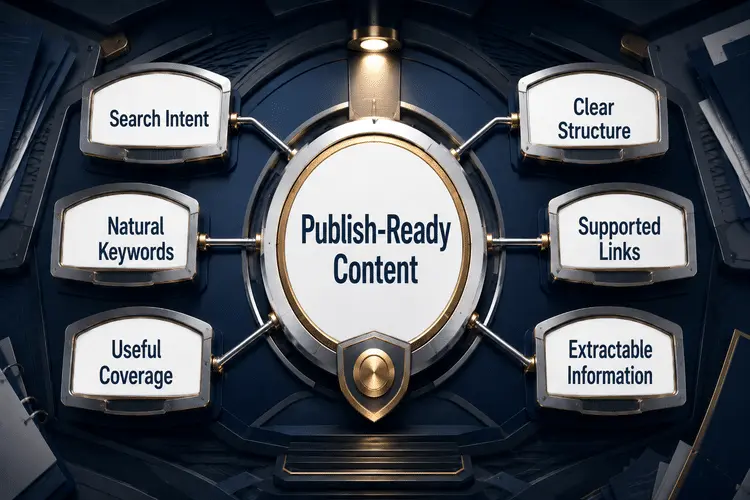
A practical content review framework for checking clarity, usefulness, search visibility, and AI-assisted interpretation before publishing.
A pre-publishing checklist for SEO and GEO content helps you review an article before it goes live, so the page is readable for people and easier for search engines and AI systems to understand. For beginner-level work, check the basics first: whether the content matches the search intent, uses keywords naturally, covers the topic clearly, and gives readers information they can actually use.
This review is not about forcing optimization into every sentence. It is about confirming that the article has clear heading structure, useful topic coverage, appropriate internal linking, accurate metadata, and information that can be understood, extracted, and referenced over time.
Confirm the Content Matches the Search Intent
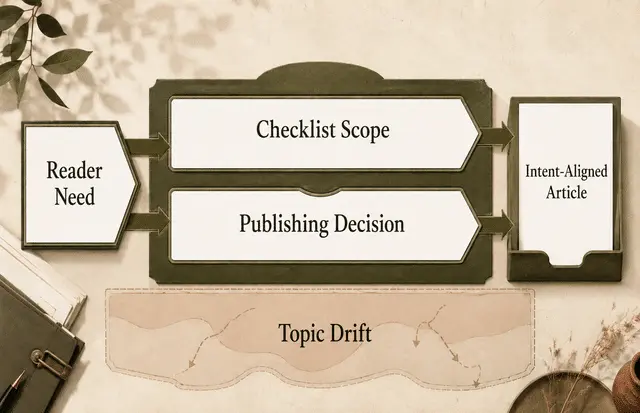
Before reviewing individual optimization details, confirm that the content matches the reason a reader would search for the topic in the first place. For this article, the search intent is informational. The page needs to help the reader understand how to review content before publishing, with a process that feels clear, practical, and easy to follow without assuming the reader already understands SEO or GEO.
Search intent is not only about matching a keyword. It is about making sure the page gives the reader the kind of answer they expected when they arrived. Someone searching for a pre-publishing checklist for SEO and GEO content is likely trying to prevent common publishing mistakes, improve search visibility, and make the content easier for AI-assisted systems to interpret. The article needs to stay centered on that practical review need.
This first check also keeps the content from drifting into a broader discussion about content strategy, ranking theory, or advanced technical optimization. Those topics may be related, but they do not belong in the center of a beginner-focused SEO and GEO checklist unless they directly support the publishing review. Each section needs to help the reader decide whether the content is ready to publish, not pull them into information they do not need at that moment.
A simple way to test intent alignment is to read the page from the perspective of the target reader and ask whether the content helps them complete the review they came for. If the answer is unclear, the page may need sharper topic coverage, clearer explanations, or a more direct connection between the checklist item and the publishing decision.
Review Keyword Placement Without Forcing Optimization
Keyword placement is a basic part of a pre-publishing checklist for SEO and GEO content, but it should never make the page sound unnatural. Use this review to confirm that important terms help define the topic clearly without interrupting the reader’s experience.
Check the Main Placement Areas
Start by checking whether the primary keyword appears where it gives the article clear topical direction. Natural placement in the article title, introduction, and at least one relevant body section can help reinforce the topic when the wording fits the surrounding content. Related phrases such as SEO content checklist, GEO content checklist, and SEO publishing checklist can also support the article when they appear in useful context.
Also check whether supporting terms appear where they help explain the review process. Keywords connected to keyword placement, topic coverage, heading structure, and content optimization checklist work best when they clarify what the reader needs to check before publishing. Avoid adding terms only because they appear on a keyword list.
Protect the Natural Flow of the Content
A keyword is placed well when the sentence still sounds like something a professional writer would naturally say. If a phrase feels awkward, repetitive, or disconnected from the section topic, revise the content for clarity instead of keeping the exact keyword placement.
Clear keyword use helps search engines and AI-assisted systems understand the page topic, while natural language gives those terms enough context to support readability, usefulness, and reference value.
Check Topic Coverage and Content Usefulness
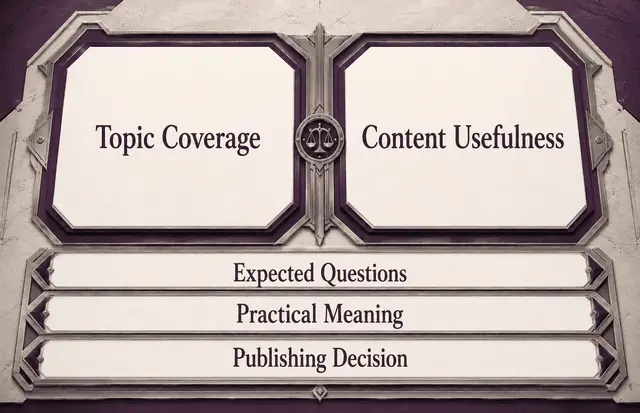
Topic coverage is the part of the review where you confirm that the content actually addresses the subject promised by the title and introduction. A page may use the right keywords and still fall short if it only touches the topic lightly or leaves out information the reader reasonably expected to find.
For a beginner-friendly pre-publishing content checklist, look at whether each major point helps the reader make a clear publishing decision. The section should make the checklist item understandable and connect it to the publishing decision, including its impact on search visibility, AI interpretation, or reader value. If a section names an important concept but does not make its practical meaning clear, it likely needs more development.
Topic coverage and content usefulness work together, but they are not the same thing. Coverage is about whether the right areas are included. Usefulness is about whether those areas are explained in a way the reader can understand and apply. A GEO content checklist, for example, needs to do more than mention extractable content or schema readiness. It has to show how those elements help the content become easier to interpret, reference, and trust.
This review can also reveal thin sections, repeated points, and vague statements that sound relevant but do not add much value. Several paragraphs may repeat the same idea in different wording, which makes the article longer without making it more helpful. A section that feels too general may need a clearer example, a sharper distinction, or a more direct explanation of the publishing issue being reviewed.
Do not try to cover every possible related subtopic. Make sure the article covers the topic deeply enough for its purpose, audience level, and search intent. Strong topic coverage gives the reader a complete working understanding of the subject without turning the article into a broad discussion that moves away from the pre-publishing review.
Strengthen Heading Structure for Readers and AI Interpretation
Heading structure helps readers understand how the article is organized before they read every paragraph. It also gives search engines and AI-assisted systems a clearer view of the page’s main ideas, supporting points, and topic relationships. In a pre-publishing checklist for SEO and GEO content, review headings for clarity, order, and usefulness.
Make the Article Path Easy to Follow
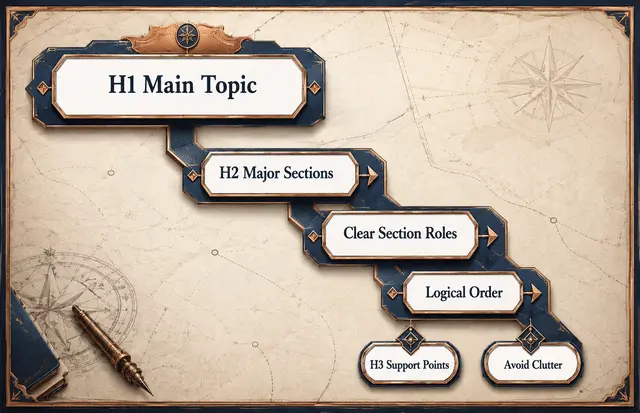
Each heading needs to help the reader understand where the article is going. The H1 identifies the main topic, while each H2 introduces a major section that supports the article’s purpose. When a heading feels vague, too broad, or disconnected from the search intent, the reader may not understand why that section belongs in the article.
Good heading structure also helps AI interpretation because it separates the content into meaningful parts. When each section has a clear role, the article becomes easier to scan, understand, and reference. This is especially important for GEO because AI systems need clear topical signals when interpreting what a page explains.
Check That Each Heading Supports Real Development
A heading should not exist only to include a keyword or create visual separation. It needs to introduce a section that can be developed with useful explanation, context, or practical review guidance. If two headings lead to nearly the same discussion, one may need to be removed, merged, or reframed before publication.
This part of the content optimization checklist is also where you check heading depth. Some articles only need H2 sections, while others may need H3 headings inside a larger section. Avoid adding headings just to add structure. The structure should help readers and AI systems understand the content without creating clutter, repetition, or artificial organization.
Verify Internal Links Support the Reader’s Next Step
Internal linking should help readers move from the current article to another useful page when they need more context. During a pre-publishing review, check whether each internal link has a clear reason to exist. A link should support the reader’s next step, clarify a related concept, or connect the article to a deeper resource that naturally fits the topic.
For SEO, internal linking helps search engines understand how pages on the site relate to each other. A useful link can strengthen topical connections between articles, service pages, resource pages, or supporting explanations. For GEO, internal links can also help AI-assisted systems interpret the broader content structure of the site by showing which pages support related ideas.
The anchor text should describe the destination clearly without sounding forced. A phrase like “heading structure for SEO content” is usually more useful than a vague phrase such as “click here” because it tells the reader and search systems what the linked page is likely to explain. At the same time, anchor text should not be overloaded with keywords just to create an optimization signal.
Use this part of the review to remove weak or distracting links. A link can reduce usefulness when it sends the reader away from the current topic, repeats another nearby link, or points to a page that does not help with the publishing decision. Strong internal linking keeps the article connected, focused, and easier to navigate.
Review the Meta Title and Meta Description
Check the meta title and meta description before publication because they help shape how the page is understood and presented in search results. They do not replace strong article content, but they do give search engines and readers a concise signal about what the page covers.
Check the Meta Title for Clear Topic Alignment
The meta title needs to reflect the article topic and align with the search intent. For this article, the pre-publishing review angle needs to be obvious without making the title sound crowded or repetitive. A natural use of the primary keyword can help reinforce the page topic, but the title still has to read clearly for a real person scanning search results.
A weak meta title is often too vague, too long, or too focused on keywords instead of meaning. During review, confirm that the title identifies the page accurately and does not promise something the article does not actually cover.
Check the Meta Description for Useful Context
The meta description needs to give a short, accurate explanation of what the reader will find on the page. It can support search visibility by making the article’s value clear, but it should not become promotional or overloaded with keyword variations.
For SEO and GEO, the description should also reinforce the practical purpose of the content. A clear description can help connect the article to content review, search visibility, AI interpretation, and publishing readiness without turning the description into a list of terms.
Check Schema Readiness Before Publishing
Schema readiness means confirming that the page is prepared for accurate structured data before it goes live. Not every page needs schema, and schema should not be added just because it is available. Focus the review on whether the page has a clear content type, visible information that supports the schema, and no mismatch between the page content and the structured data that may be added later.
For a beginner-level SEO and GEO checklist, the safest starting point is accuracy. On an informational article, the schema needs to match that purpose. A visible Q&A section may support FAQ-related schema only when the questions and answers actually appear on the page. Any schema element that is not visibly supported by the page content should be left out.
This matters because schema can help search engines and AI-assisted systems understand the page more clearly, but inaccurate schema can create confusion. Structured data should not claim content, features, reviews, services, or answers that the reader cannot verify on the page itself. Schema readiness is a content review issue as much as a technical issue.
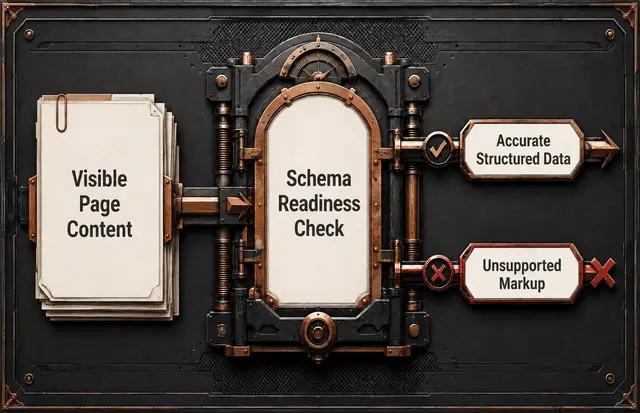
Before publishing, confirm that the article has enough clarity for schema to describe it accurately. The title, heading structure, content usefulness, and main topic should all point in the same direction. When the page is clear on its own, any later schema markup has a stronger and more reliable foundation.
Make Sure Key Information Is Clear and Extractable
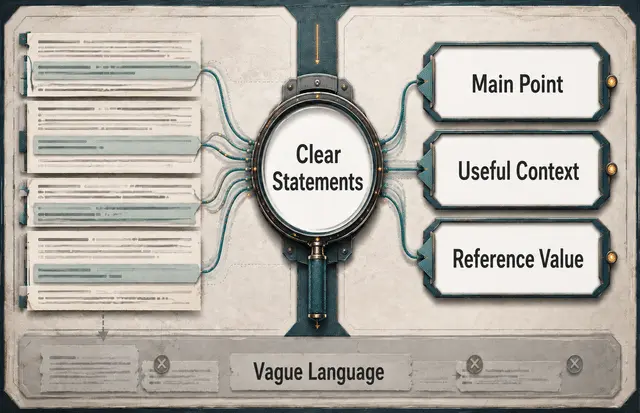
Clear and extractable content is easy for both readers and AI-assisted systems to identify, understand, and reuse in context. Before publishing, review whether the article’s most important information is stated directly enough that a reader can find the main point without sorting through vague setup or repeated wording.
Check for Direct, Useful Statements
Each major section should contain clear statements that explain what the reader needs to know. If the content describes a checklist item, it should make the purpose of that item easy to understand. For example, a section about internal linking should clearly explain how links support navigation, topic relationships, and search visibility.
That does not require every paragraph to sound like a definition or answer block. Important ideas simply need to be easy to find instead of buried inside long, indirect, or overly general explanations. Strong extractable content gives AI interpretation enough context to understand what the page says while still reading naturally for people.
Remove Language That Weakens Reference Value
Content becomes harder to reference when it relies on vague claims, unsupported statements, or sentences that sound useful but do not say anything specific. During the review, replace generic phrases with explanations that are tied directly to the article topic.
The goal is to make the article useful beyond the first read. When key information is clear, specific, and easy to locate, the page has stronger long-term reference value for readers, search engines, and AI-assisted systems evaluating the content.
Complete the Final SEO and GEO Content Review
The final review brings the full SEO and GEO checklist together before the article is published. By this point, the content needs to match the search intent, use keywords naturally, cover the topic clearly, and provide useful information that a beginner can understand. The final pass confirms that those pieces work together as one complete article.
Read through the page from the reader’s perspective first. The article should make each checklist item clear and show how the overall review supports search visibility, AI interpretation, and long-term content usefulness. If the article feels clear in isolated sections but uneven as a full page, refine the transitions, remove repeated points, and confirm that the structure still supports the main topic.
Then review the page from an optimization perspective. Confirm that the SEO content checklist elements are in place, including keyword placement, heading structure, internal linking, meta title, meta description, and schema readiness where appropriate. For GEO, check whether important information is specific, extractable, and supported by enough context to be understood without relying on vague claims or mechanical phrasing.
The content is ready to publish when a real reader can use it confidently and search or AI-assisted systems can interpret its main points without confusion. A strong final review does not add unnecessary optimization. It removes weakness, improves clarity, and confirms that the article delivers on the purpose promised by the title.

A strong pre-publishing checklist helps prevent avoidable content problems before they reach the live page. Reviewing SEO and GEO content for clarity, usefulness, structure, and interpretation strengthens search visibility, reader trust, and long-term reference value.
Common Questions About Pre-Publishing SEO and GEO Content
How do I know if content is ready to publish?
Content is ready to publish when it clearly matches the search intent, explains the topic in a useful way, uses keywords naturally, and gives readers enough context to understand the subject without confusion. It should also have a clear heading structure, relevant internal links, accurate metadata, and important information that is easy for search engines and AI-assisted systems to interpret.
What should I fix if an article has keywords but still feels weak?
If an article has keywords but still feels weak, review the content for usefulness, topic coverage, and clarity before adding more optimization. The issue may be thin explanations, repeated points, vague statements, weak headings, or missing context. Strong SEO and GEO content should use keywords to support meaning, not as a replacement for clear and helpful information.
How is a GEO content review different from a basic SEO review?
A basic SEO review often focuses on search intent, keyword placement, headings, internal links, metadata, and schema readiness. A GEO content review also looks at whether the content is clear, specific, extractable, and easy for AI-assisted systems to understand in context. Both reviews support visibility, but GEO places more emphasis on answer clarity, reference value, and reducing ambiguity.